HARTWELL, Georgia — As hospitals face rising drug, labor, and supply costs, alongside deep Medicaid reimbursement cuts, a new study presented at the Association for Vascular Access (AVA) 2025 Annual Scientific Meeting highlights how the choice of ultrasound probe disinfection method can directly affect both budgets and workflow efficiency.
The comparative analysis—led by Nancy Moureau, RN, PhD, CRNI, CPUI, VA-BC, CEO of PICC Excellence, and Connie Cutler, MS, BS, BSN, RN, CIC, FSHEA, FAPIC, president and CEO of Chicago Infection Control Inc.—evaluated three high-level disinfection (HLD) technologies: vaporized hydrogen peroxide, glutaraldehyde soak, and chlorine dioxide foam applied with a proprietary wipe.
“Healthcare systems are being asked to do more with less,” says Moureau. “Probe disinfection may seem like a small piece of the puzzle, but inefficiencies in this step can cascade across departments. Solutions that reduce turnaround time and eliminate transport delays have a measurable impact on cost and patient access.”
Disinfection Methods Under the Microscope
The analysis highlights meaningful differences in turnaround time, cost per cycle, and workflow integration—critical variables for hospitals facing unprecedented financial strain.
- Vaporized Hydrogen Peroxide (Trophon2): Provides consistent HLD in a closed system but requires costly equipment and consumables. Transport to a reprocessing area often adds minutes to the cycle.
- Glutaraldehyde Soak: Appears inexpensive per cycle, but requires equipment management, daily concentration testing, disposal oversight, and staff labor—all adding indirect costs.
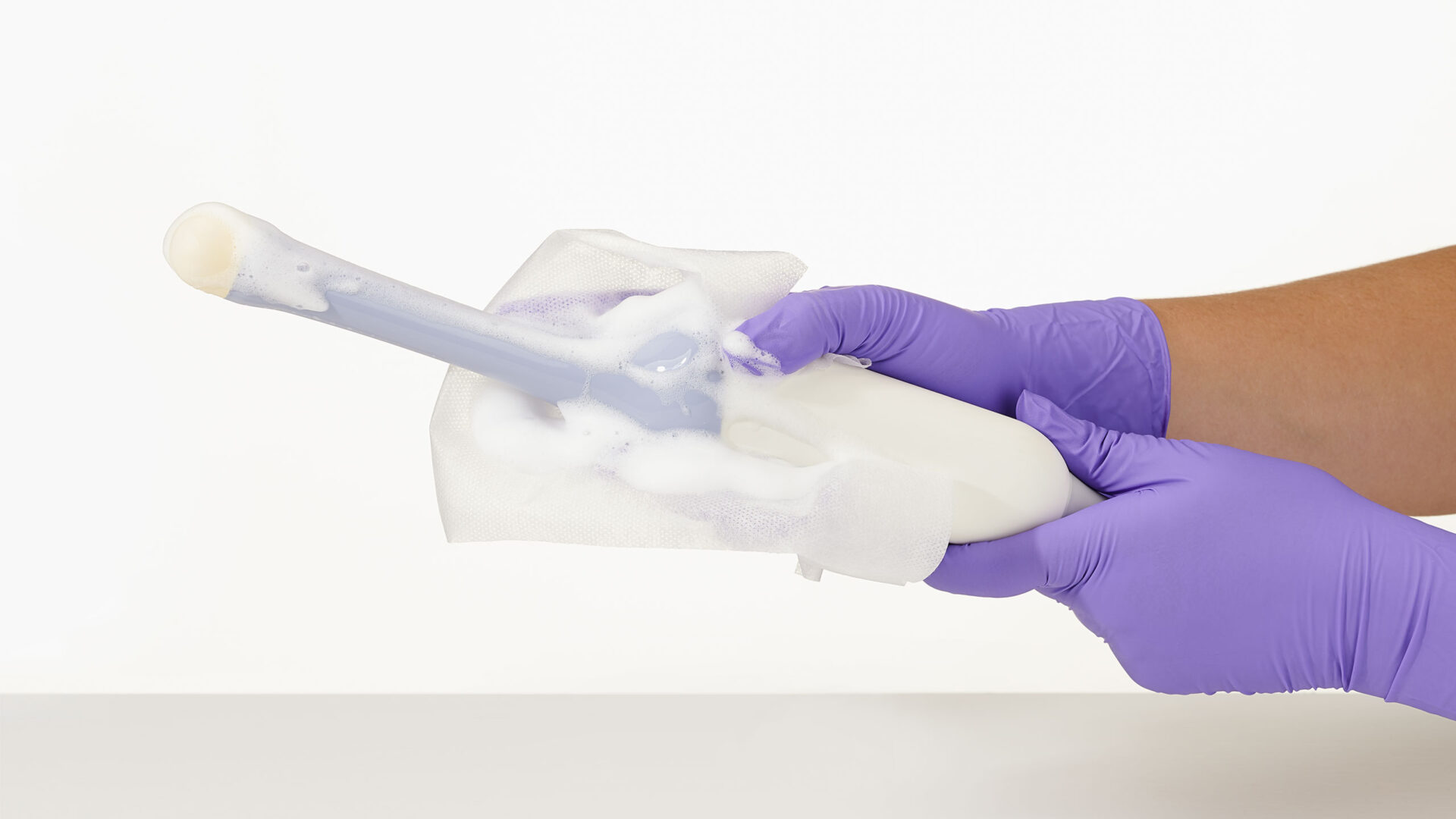
- Chlorine Dioxide Foam and Wipes (Tristel ULT): Newly available in the United States, this point-of-care option disinfects probes in two minutes, eliminating transport and reducing downtime.
Cutler emphasizes the significance of these findings in today’s environment: “When hospitals are grappling with staffing shortages and reimbursement cuts, every minute of staff time counts. Point-of-care disinfection not only reduces probe downtime but also helps avoid the need for duplicate probe inventory, lowering both capital and operational costs.”
Financial Context
According to the 2025 Hospital Systems Survey by Modern Healthcare, three-quarters of health systems identified rising healthcare expenses as one of their greatest challenges, with leaders citing the urgency of cutting waste and streamlining workflows. Probe disinfection, while essential for infection prevention, can become a hidden cost driver when it involves complex transport or expensive consumables.
“Efficiency is no longer optional—it’s a survival strategy,” says Moureau. “Hospitals can’t afford to choose methods that drain resources or disrupt patient flow. The goal of our analysis is to give clinicians and administrators clear, evidence-based comparisons so they can select methods that protect patients and make financial sense.”
Navigating Complex Guidelines
The study also notes that probe disinfection guidelines vary depending on procedure type, and manufacturers sometimes prohibit the use of certain disinfectants to protect device integrity. These variations, coupled with operational pressures, leave many hospitals struggling to balance compliance with practicality.
“Consistency is the foundation of infection prevention,” says Cutler. “If a method is too complex, staff compliance drops. By simplifying disinfection steps at the bedside, we help ensure protocols are followed every time, which protects patients and preserves budgets.”
Poster Details
The poster, “Disinfection Showdown: Automated Vapor, Soaking, and Foam Methods Under the Microscope,” will be presented as part of the online poster session at the AVA 2025 Annual Scientific Meeting, September 19–21, in Kissimmee, Florida. Conference attendees can obtain a handout version of the poster at the Parker Laboratories booth (#606), where high-level disinfection using Tristel ULT will also be demonstrated throughout the meeting.
About PICC Excellence
PICC Excellence provides vascular access education and training services to clinicians worldwide. Founded by Dr. Nancy Moureau, PICC Excellence is internationally recognized for its evidence-based education, training, and protocol development, which support safe vascular access and infection prevention practices. For more information, visit www.piccexcellence.com.
About Chicago Infection Control, Inc.
Founded by Connie Cutler, Chicago Infection Control offers consultation services on infection prevention and control in healthcare settings. The agency builds on Cutler’s experience and a robust skillset that includes hospitals, infection prevention and control, infectious diseases, biology, nursing and more.